

IDEST Training

TSR Scuba is proud to be an Idest Approved Training Centre, delivering Idest-endorsed safety and technical training for professionals and organizations. As an approved centre, we meet Idest’s rigorous standards for curriculum design, instructor qualifications, facility quality, and assessment, ensuring each course combines theory with practical, scenario-based practice. Our offerings cover all core skills, with small class sizes and flexible scheduling to maximize learning. Our experienced instructors bring real-world industry expertise, providing personalized coaching, constructive feedback, and industry-recognized credentials. Through this partnership with Idest, TSR Scuba stays current with evolving safety standards delivering trusted, high-quality training that helps organizations and individuals operate safely, compliantly, and efficiently. Who Are Idest? IDEST are accredited to ISO/IEC 17024 and certify cylinder technicians operating to international testing standards. IDEST’s mission is to offer industry-standard training courses and establish test centres that equip individuals to become proficient certified dive technicians and inspectors. The courses cover the inspection and testing of dive tanks and other cylinders & equipment, while also establishing global test centres that comply with and collaborate with organizations such as HSE, VCA, UKAS, OFQUAL, and C&G.
IDEST
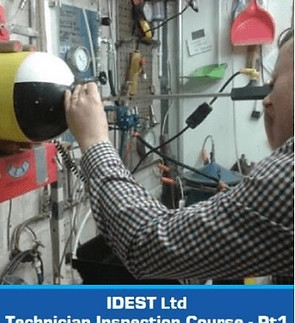
Visual Inspection Course - PT1
Course Overview Covers the external & internal inspection of diving cylinders. Introduction This is the first part of a two-part course aimed at technicians wanting to fully inspect cylinders in IDEST Inspection or Test Centres. Candidates can opt to do the full course or attend Part 1 and Part 2 separately. Under the HSE's publication Pressure System Safety Regulations 2000 it is the responsibility of the owner/employer to provide suitable training to ensure the employee is competent to safely fulfil their role. Scope This Part 1 course is aimed at staff who wish to train as cylinder inspecting technicians. It covers the knowledge and practical skills needed to visually inspect a diving and breathing gas cylinder both externally and internally. The course is provided on the basis that the staff are from an existing IDEST Centre or that the company will become an IDEST Centre in the foreseeable future. Aim of the Course At the end of this short course the student will be able to: Confidently and competently visually assess diving cylinders both externally and internally Determine whether a cylinder can be safely filled or whether it requires a test or further action Satisfactorily complete the booking-in form and visual assessment form Course Outline The course is based on a workshop format and lasts about 3 to 4 hours. It starts with a short presentation that covers the topics shown below. This is followed by a practical workshop session where cylinders are booked in and assessed for their safety. A visual assessment form is completed as the final stage of this process. Session Topics IDEST and the scope of its work Cylinder manufacture Cylinder testing methods Cylinder stamping and labelling Tools/equipment required for basic assessment Checking the external condition of cylinders Valve removal using appropriate equipment Checking the internal condition of cylinders Action to take in the event of concerns over condition Forms and paperwork for assessment Standards covering assessment and inspection Cylinder and valve drawings Calibration certificates What Will You Get? Training from a qualified, competent, IDEST approved trainer Advice and guidance appropriate to their role An e-certificate and e-card 18-page digital Student Manual as source material
IDEST
Hydrostatic Insp Course - PT2
Course Overview Deals with the hydraulic testing of breathing gas cylinders. Introduction This course has been developed for IDEST Test Centre staff, who have already attended an IDEST Technician Inspection Course Part 1. The training course extends their knowledge to include methods of hydrostatically testing diving and breathing gas cylinders. Scope The course is for technicians, who want to provide a cylinder testing service to their customers. The course content will provide them with sufficient knowledge and practical skills to test cylinders. This is covered by BS EN ISO 18119 - Inspection and testing of cylinders. Aim of the Course At the end of this short course the student will be able to: Confidently and competently check cylinder and valve threads Hydrostatically test a cylinder to determine its permanent set Stamp and label the cylinder according to ISO standards Issue test certificates for those passing the test Course Outline The course is based on a classroom and workshop format and lasts about 5 to 6 hours. It starts with a short presentation that covers the topics shown below. This is followed by a practical workshop session where cylinders are disassembled, hydrostatically tested, dried, reassembled, stamped and labelled according to ISO 13769. Session Topics Cylinder testing methods (various methods) Tools/equipment required for hydraulic testing Checking system is working satisfactorily - Action to take if problems occur Preparation of cylinder in test chamber Checking system is pressure tight The hydraulic test procedure Readings needed and working out results Removal of cylinder from chamber Methods of drying cylinder - Post drying internal inspection Valve replacement and correct torqueing Cylinder stamping and labelling Completion of documentation What Will You Get? Training from a qualified, competent, IDEST approved trainer Advice and guidance appropriate to your role An e-certificate and e-card A digital Course Manual as source material
IDEST
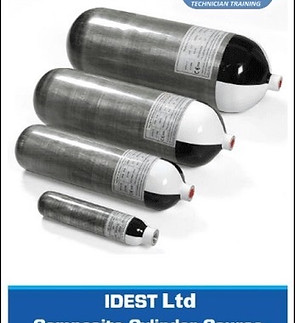
Composite Cylinder Course
Course Overview Extends a technician's training to cover composite cylinders. Introduction This course has been developed as a result of requests from Test Centres for further training. Centres are being approached by industry to extend the type of cylinders that they are able to inspect and test. Scope The course is aimed at IDEST test centre staff, who are already qualified as test centre technicians; able to inspect and test steel and aluminium cylinders. The training provides sufficient knowledge to allow the technicians to inspect and test composite cylinders under EN ISO 11623. Aim of the Course At the end of this short course the student will be able to: Understand the construction of composite cylinders Confidently and competently visually assess composite cylinders both externally and internally Determine whether a composite cylinder requires repairing and the method to use or if it should be condemned/scrapped Hydraulically test a composite cylinder Course Outline The course is based on a workshop format and lasts about 1 to 3 hours. It starts with a short presentation that covers the topics shown below. This is followed by a practical workshop session where composite cylinders are assessed externally and repaired as necessary. Session Topics Cylinder manufacture Composite cylinder manufacture Types of composite cylinders Inspecting and testing composite cylinders Inspection process Repairing acceptable damage Testing methods Valve inspection and refurbishment Replacement and torquing of cylinder valve Labelling of composite cylinders Action in the event of concerns over condition What Will You Get? Training from a qualified, competent, IDEST Ltd approved trainer Advice and guidance appropriate to your role An e-certificate and e-card A Student Manual as source material
IDEST
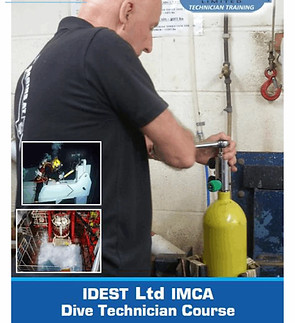
IMCA Cylinder Course
Course Overview A cylinder inspection course for dive technicians working offshore. Introduction This course has been developed specifically for dive technicians working in the Offshore Industry. The emphasis is on the Code of Practice D018 to which IMCA firms work. Scope The course is for dive technicians, who want to be able to inspect diving and breathing gas cylinders that are used by offshore commercial companies. Aim of the Course At the end of this short course the student will be able to: Confidently and competently inspect diving and breathing gas cylinders, remove and refurbish cylinder valves Know the content of the Code of Practice D018 relating to the inspection of cylinders Understand the content of cylinder and valve drawings as provided by manufacturers Be aware of the content and information provided on thread gauge calibration certificates Course Outline The course is based on a classroom and workshop format and lasts about 6 to 8 hours. It consists of a theory presentation that covers the topics shown below. This is followed by a practical workshop session where cylinder valves are removed, cylinders inspected externally and internally and the valve refurbished. The cylinder is then labelled according to ISO 13769 and an inspection report completed. Session Topics IDEST and the scope of its work Cylinder manufacture and Standards information Cylinder information and cylinder testing methods IMCA Code of Practice D018 and Details sheets Cylinder stamping and labelling Tools/equipment required for basic inspection Checking external condition of cylinders Valve removal Checking internal condition of cylinders Conducting internal inspections Valve dismantling and cleaning Refitting and torquing of cylinder valve Action to take in the event of concerns over condition of valve or cylinder Forms and paperwork for inspection Standards covering inspection and testing of cylinders Cylinder and valve drawings and information for technicians Thread gauge calibration certificates and contained information What Will You Get? Training from a qualified, competent, IDEST Ltd approved trainer An e-certificate and e-card A digital Course Manual as source material

IDEST
Oxygen Cleaning Course
Course Overview Knowledge required to put cylinders and valves in oxygen service. Introduction The Oxygen Cleaning Course is for dive technicians, who have already gained experience in the inspection and testing of diving and breathing gas cylinders. This course will increase the knowledge base of their skills and provide additional scope for the business. Scope The Oxygen Cleaning Course covers the knowledge and practical skills needed to oxygen clean diving and breathing gas cylinders. The course is provided on the basis that the staff are from an existing IDEST Inspection or Test Centre. Aim of the Course At the end of this short course the student will be able to: Assess whether a cylinder is suitable for oxygen cleaning Confidently and competently oxygen clean diving cylinders Determine whether a cylinder can be safely filled with a mixed gas Satisfactorily complete any associated paperwork Course Outline The course is based on a workshop format and lasts 6 to 8 hours. It starts with a short presentation that covers the topics shown below. This is followed by a practical workshop session, where cylinders are assessed as being suitable for oxygen cleaning, cleaned using appropriate cleaning agents and the valve oxygen cleaned and refitted. Session Topics Why O2 clean cylinders 'Oxygen Clean' defined What is oxygen enriched air What are 'contaminants' Clean Areas Cylinder cleaning methods Safe disposal of materials Cleanliness and inspection How is it done? Cleaning cylinder valve Valve reassembly System reassembly What Will You Get? Training from a qualified, competent, IDEST Ltd approved trainer Advice and guidance appropriate to your role An e-certificate and e-card A digital Student Manual as source material

IDEST
Regulator Servicing Course
Course Overview Generic course to provide an understanding of servicing principles. Introduction The Regulator Servicing Course is for dive technicians, who wish to extend the scope of their knowledge. This course will increase the knowledge base of their skills and provide additional scope for the business. Scope The Regulator Servicing Course is a 'generic' course and covers the knowledge and practical skills needed for servicing diving regulators. The course is not a substitute for the manufacturers' courses, which would be needed in order to buy servicing kits from manufacturers. Aim of the Course At the end of this short course the student will be able to: Explain the basic principles of regulator operation Assess a regulator prior to dismantling Confidently and competently dismantle, clean and reassemble a regulator Determine whether, through thorough testing, that a regulator is functioning properly Satisfactorily complete any associated paperwork Course Outline The course is based on a workshop format and lasts 6 to 8 hours. It starts with a short presentation that covers the topics shown below. This is followed by a theory assessment and a practical workshop session, where regulators are assessed, dismantled, cleaned and reassembled. Session Topics Principles of operation First Stage Second Stage Identify tools required Initial test of regulator Draw hose configuration Dismantling of regulator Cleaning regulator parts Washing and drying regulator parts Reassembly of regulator Testing and adjustment for optimum performance Report of service performed What Will You Get? Training from a qualified, competent, IDEST Ltd approved trainer Advice and guidance appropriate to your role An e-certificate and e-card A digital Student Manual as source material